How to Short a Stock on E*TRADE: A Beginner's Guide
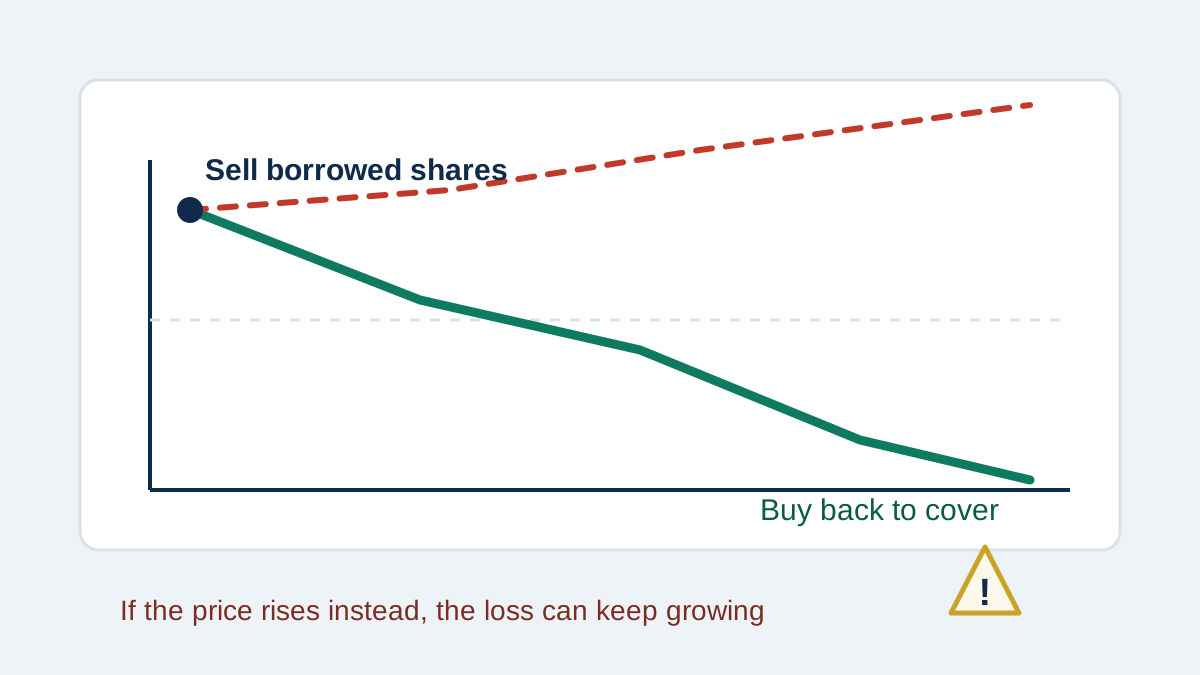
Short answerShort selling is a way to take a position that gains when a share price falls. On a brokerage platform such as E*TRADE, it is done from a margin account: you borrow shares, sell them at the current price, and later buy them back to return them. If the price fell, you keep the difference. If it rose, you pay the difference, and because a price can keep rising, the possible loss has no fixed limit.
Key takeaways
- Short selling means borrowing shares, selling them, and buying them back later. You gain if the price falls and lose if it rises.
- Short selling needs a margin account with short selling enabled. It is not available in a cash account or a retirement account.
- The possible loss has no fixed limit, because a share price can keep rising and the shares still have to be bought back.
- A short position is closed with a buy to cover order, and interest, borrow fees and any dividends owed while the position was open add to the cost.
What short selling is
A normal investment buys first and sells later, hoping the price rises. Short selling reverses the order. You sell first, using shares borrowed from your broker, and buy later to close the position. The trade profits from a fall instead of a rise.
The borrowed shares are a real obligation. While the position is open you owe those shares back, you may be charged interest on the borrowing, and you are responsible for any dividends paid while you hold the short position. Your broker can also require you to close the position if the borrowed shares are recalled or if your account no longer meets its requirements.
The account you need
Short selling cannot be done in a standard cash account or a retirement account. Brokers, including E*TRADE, require a margin account with short selling enabled. A margin account lets you borrow against the value of your account, and it comes with minimum balance rules and maintenance requirements set by regulation and by the broker's own policies.
Approval is not automatic. The broker reviews the application, and margin accounts require the account holder to keep a required minimum equity. If the value of the account falls below the maintenance level, the broker issues a margin call, which means adding funds or closing positions, and the broker may close positions itself if the call is not met.
The general steps on a brokerage platform
Menu names and screen layouts change over time, so this is the sequence in general terms rather than a map of one app's screens. The order of events is the same on most platforms.
Check the stock can be borrowed
Not every stock is available to short. The broker needs shares it can lend, and some stocks are marked as hard to borrow or unavailable. The stock's quote or order page usually shows whether short selling is available and, where relevant, that borrow costs apply.
Place a sell to open order
A short sale is entered as a sell order on a stock you do not own, often labelled sell short or sell to open. You choose the number of shares and the order type, such as a market order or a limit order, in the same way as a normal sale. When it fills, the shares are sold and the proceeds are credited to the margin account, but they are not fully yours to withdraw, because the position is still open.
Watch the position and the margin level
An open short position is marked to the market price every day. A rising price increases what you owe and reduces your account equity. Many traders decide in advance the price at which they will close the position if the trade moves against them, because waiting and hoping is not a plan when losses are open ended.
Buy to cover to close
Closing is done with a buy to cover order for the same number of shares. The bought shares are returned to the lender and the position ends. Your result is the difference between the selling price and the buying price, minus interest, borrow fees and any dividend amounts you owed while the position was open.
The risks, stated plainly
The main risk is the shape of the loss. When you buy a stock, the most you can lose is the money you paid, because a price cannot fall below zero. When you short a stock, the price can rise far above your selling price, and you have to buy back at that higher price. There is no ceiling on how high a price can go, so there is no fixed limit to the loss.
Short positions can also move very fast. If many short sellers try to close at the same time, their buying pushes the price up further, a pattern known as a short squeeze. Add margin rules on top: a position can be closed for you at the worst moment if your account equity is too low. For these reasons, regulators and brokers treat short selling as an advanced strategy, and beginners usually start by learning it on paper before risking real money, if they use it at all.
Frequently asked questions
Do I need a margin account to short a stock on E*TRADE?
Yes. Short selling requires a margin account with short selling enabled. It is not available in cash accounts or retirement accounts.
What does buy to cover mean?
It is the order that closes a short position. You buy the same number of shares you sold short, and those shares are returned to the broker that lent them.
How much can I lose short selling?
More than the value of the shares you sold. A share price can keep rising, and you must buy back at the higher price, so the loss has no fixed limit. Interest and fees add to it.
Can my broker close my short position without asking me?
Yes, in defined situations. If your account falls below its maintenance requirement, or the borrowed shares are recalled, the broker can close the position under the margin agreement.
Sources and references
This article is general information about how investing works. It is not financial advice and it is not a recommendation to buy, sell or short any stock. Investing involves risk, including the possible loss of the money invested, and short selling can lose more than the amount at the start. Read the full financial disclaimer.
Related articles
MyRadar Stock: Is MyRadar Publicly Traded?
MyRadar is a weather app made by a private company, ACME AtronOmatic. It has no stock symbol and its shares are not traded on any exchange.
Barcode Stock Management Software: How to Choose
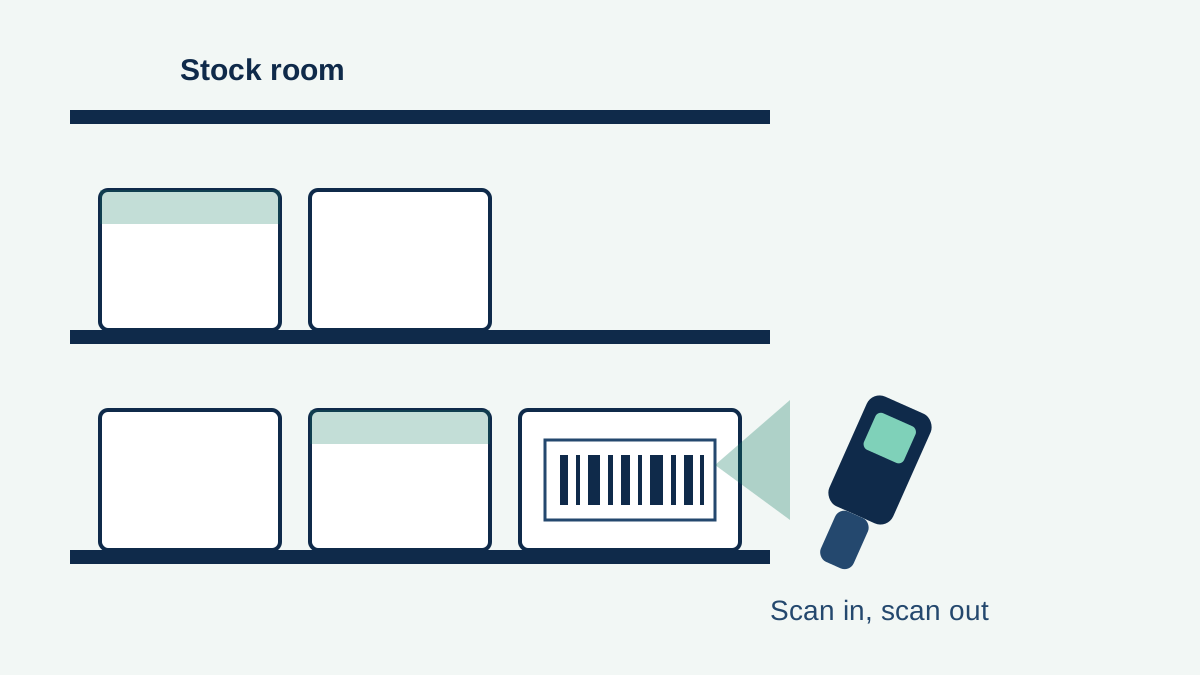
Barcode stock management software records goods in and out by scanning labels instead of typing counts. Here is how it works and what to ask before buying.